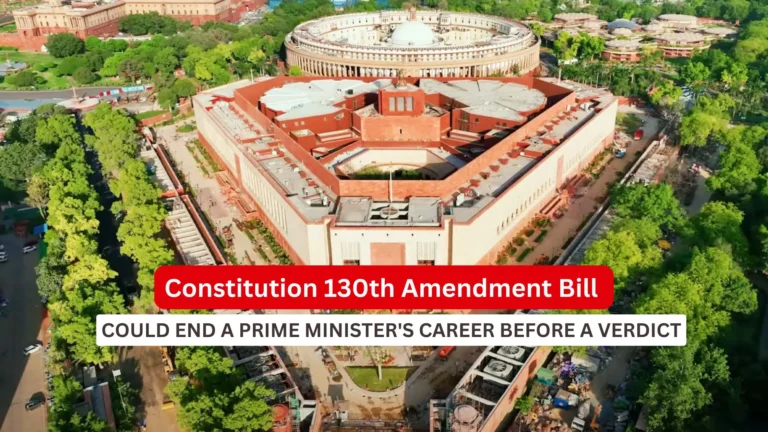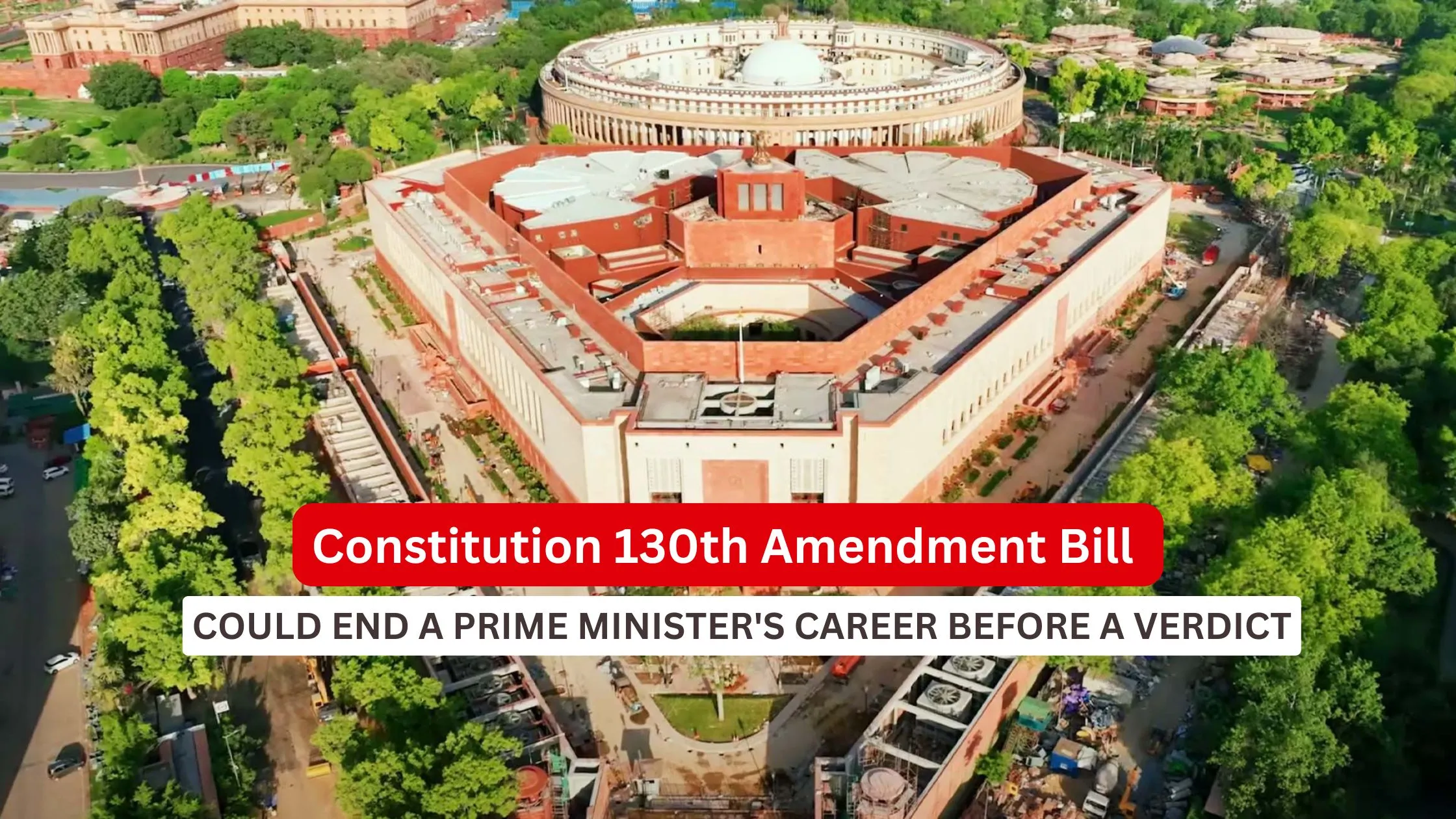
What happens to a democracy when the person governing it is sitting behind bars? India's Parliament is still working out an answer to that very question with the help of Constitution Amendment Bill!
A Joint Parliamentary Committee examining three landmark bills has been granted additional time to submit its report. Lok Sabha approved the extension on March 27, 2026, giving the committee until the first day of the last week of the Monsoon Session of Parliament 2026, which typically begins in the third week of July.
What Are These Bills About?
The three bills under examination propose a significant constitutional shift. They seek to automatically remove the Prime Minister, Chief Ministers, and Union Ministers from office if they remain under arrest for 30 consecutive days on serious charges.
The bills are:
- The Constitution (130th Amendment) Bill, 2025
- The Jammu and Kashmir Reorganisation (Amendment) Bill, 2025
- The Government of Union Territories (Amendment) Bill, 2025
Home Minister Amit Shah introduced all three in the Lok Sabha on August 20, 2025. They were then referred to a Joint Parliamentary Committee chaired by BJP leader Aparajita Sarangi.
Constitution Amendment Bill: Why Does This Matter?
India has seen several high-profile cases where elected leaders continued to keep office or governing at their position even after arrest. For instance, Delhi’s former CM Minister Arvind Kejriwal, refused to renounce after his arrest in March 2024 in connection with the liquor policy case. This decision to govern from jail sparked a fierce national debate about accountability, constitutional norms, and democratic ethics.
According to a report by The Hindu, legal experts had then pointed out that Indian law has no clear provision forcing an elected official to step down upon arrest. These bills aim to fix exactly that gap.
A Global Perspective: India is not alone…
India is not alone in wrestling with this issue. Several democracies have also faced such dilemmas. For example, in South Korea, former President Park Geun-hye was removed through impeachment before her conviction. Brazil’s charter permits removal of a president via impeachment if found guilty of serious criminal charges. But what distinguishes India’s proposed technique is its automatic removal mechanism based on arrest duration, that is 30 days, instead of conviction.
However, legal scholars have raised concerns about this major politics-changing criteria. The distinction among arrest and conviction matters deeply in a justice system built at the presumption of innocence. Writing for Bar and Bench, constitutional lawyer Sanjay Hegde mentioned that automatic disqualification upon arrest will be misused in a politically charged environment in which arrests themselves are questioned sometimes.
The Road Ahead for Constitution Amendment Bill
The committee’s extended deadline indicates that the discussions are complicated so they need more time to conclude a point carefully. Parliament giving itself more time signals awareness of the weight of what is being decided, since balancing accountability with fairness to the accused is not a small task.
The bills, if passed, would reshape how power transitions happen in India at every level of government, from the national cabinet to state assemblies and Union Territories.
So here is the question worth sitting with:
In a country where political arrests have often been disputed, can a law built around arrest rather than conviction ever be truly neutral?
More News





About the Author