
The Punjab Govt is facing sharp criticism after a Sikh youth alleged custodial torture by Sangrur police. The row erupted on September 2, 2026, in Sheron village. Mohanjit Singh, an anti-drug activist, waved a black flag during Chief Minister Bhagwant Mann’s public event. He was detained soon after. What followed has triggered a political storm across the state, human rights complaints, and now a second controversy involving a suicide in the same district.
What happened during CM Mann’s event in Sheron?
Chief Minister Bhagwant Mann held a “Lok Milni” programme in Sheron village on September 2. The event was part of the government’s anti-drug outreach. Mohanjit Singh wanted to question the Chief Minister about drugs. Mohanjit was not allowed to meet CM.
He then climbed onto the roof of a house nearly 200 metres from the venue. He displayed a black flag and raised slogans. Police detained him soon after.

Mohanjit later alleged he was tortured in custody. His family and opposition leaders said he was stripped and beaten. They claimed cuts were made on his thighs with a blade. Salt was allegedly rubbed into the wounds. He also alleged electric shocks and that he was forcibly made to consume drugs.
Shiromani Akali Dal president Sukhbir Singh Badal visited Mohanjit at Sangrur Civil Hospital. He alleged the youth’s turban and beard were mishandled during the assault.
What does the Punjab Govt say about the allegations?
Sangrur police rejected the torture claims. SSP Ravjot Kaur Grewal said Mohanjit faced eight FIRs in serious offences. She said his detention was a preventive measure ahead of the CM’s programme. She added that no fresh injury marks were found on him during his medical examination before he was produced before the Sub-Divisional Magistrate.
Despite this, the Punjab Govt took administrative action within days. On September 5, the Punjab DGP transferred DSP Harvinder Singh from Sunam to the 1st CDO Battalion in Bahadurgarh, Patiala. Three other officials were also moved.
Officials transferred:
- DSP Harvinder Singh, DSP (SD) Sunam
- Inspector Parteek Jindal, SHO Police Station City, Sunam
- SI Baljit Singh, SHO Police Station Cheema
- ASI Harpreet Singh, in-charge ZP City, Sunam
The transfer orders cited “administrative grounds.” Sangrur police also ordered a departmental inquiry into the torture allegations.
What do NHRC and the Minorities Commission say?
The National Human Rights Commission has taken serious note of the case. It acted on a complaint by BJP Rajya Sabha MP Tarun Chugh. An NHRC bench headed by Member Priyank Kanoongo directed the Punjab Chief Secretary, DGP, SP Sangrur, and DM Sangrur to conduct an inquiry. The commission sought a point wise Action Taken Report within two weeks.
The National Commission for Minorities has also stepped in. NCM chairman Harjit Singh Grewal said, “Every citizen is entitled to dignity, respect and protection of his or her religious identity. We have already taken cognisance of the complaint and sought a detailed report from the DGP, Punjab, within 10 days.”
The NCM complaint raised concerns about interference with Mohanjit’s religious identity during the alleged assault.
How has the Punjab Govt responded to Opposition demands?
Opposition parties have kept up the pressure on the Punjab Govt. Leader of Opposition Partap Singh Bajwa and Punjab Congress president Amarinder Singh Raja Warring separately approached the NHRC. They sought an independent, time bound inquiry.
Warring said, “Punjab is not a police state. No government or police force can be allowed to treat peaceful dissent as a crime.” He said a peaceful protest cannot justify torture or custodial abuse.
Congress leader Rahul Gandhi spoke to Mohanjit over phone. He assured him of support, according to Warring. SAD president Sukhbir Singh Badal and Punjab BJP chief Kewal Singh Dhillon also condemned the alleged torture.
On September 6, Mohanjit was shifted to Government Rajindra Hospital in Patiala after he complained of uneasiness. His supporters alleged his condition worsened after an injection by a junior doctor in Sangrur. Dr Vishal Chopra, Medical Superintendent of the hospital, said, “His CT scans came out normal, and his other vital parameters are being monitored. He is under observation but is stable.”
The shift came hours before a planned dharna outside the Sangrur SSP office. The protest was later postponed.
How is the Gulzar Singh case linked to the Punjab Govt’s Drug Campaign?
A second controversy has now added to the pressure on the Punjab Govt. Gulzar Singh, 46, a daily wage worker from Toor Banjara village in Sangrur’s Dirba constituency, died by suicide on September 7. He belonged to the Dalit community. He allegedly consumed poison after questioning Finance Minister Harpal Singh Cheema.
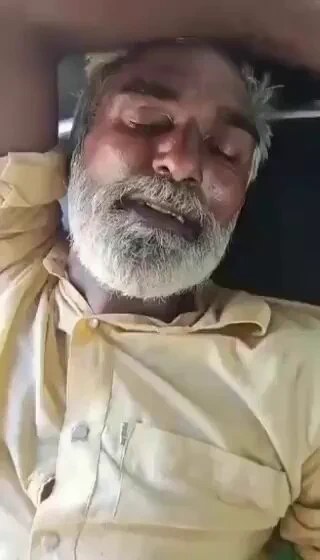
Cheema had visited the village on September 6 to hear public grievances as part of the Punjab Govt’s anti-drug drive. Gulzar raised the issue of easy availability of chitta, or synthetic drugs, in the area. He said his son was addicted and the family had sold belongings to fund the addiction.
His family alleged local leaders, including panchayat members, pressured him afterward to apologise. They also allege he was subjected to casteist slurs. Before his death, Gulzar recorded a video naming those he held responsible. His nephew, Karanvir Singh, said, “We want justice.”
Cheema denied any role in the death. He told The Indian Express he regularly meets people in his constituency. He said he had listened to Gulzar’s complaint and offered assistance.
What does the FIR say?
Sangrur police registered an FIR based on the statement of Gulzar’s son, Lakhwinder Singh. Five people have been booked under the Bharatiya Nyaya Sanhita and the SC/ST Act:
- Baljit Singh, village sarpanch
- Baljinder Kaur, sarpanch
- Sukhdev Singh, panchayat member
- Vicky Singh, panchayat member
- Gona Singh
Notably, Minister Harpal Singh Cheema’s name does not figure in the FIR. Punjab Police formed a Special Investigation Team to probe the death.
Opposition leaders have pushed back on this. Punjab Leader of Opposition Partap Singh Bajwa said Gulzar had named Cheema as “directly responsible” for the harassment, along with the sarpanch and others, in his video statement. Congress leader Rahul Gandhi went further, demanding Chief Minister Mann seek Cheema’s resignation and calling for the minister’s name to be added to the FIR. Punjab Congress chief Warring wrote on X that Gulzar was subjected to “immense harassment and pressure” after he raised his voice.
Not everyone links the death directly to the drug issue. Former Punjab DGP S.S. Virk said the case stemmed from a village dispute rather than the chitta menace itself. “This particular incident is not linked to the drug problem. It began with a minor village dispute where the individual felt offended by a remark made by the Minister. The sarpanch demanded an apology,” Virk said.
Opposition parties, including the BJP and SAD, have demanded the resignation of Cheema and Chief Minister Mann over the incident.
Timeline of the Punjab Govt custodial torture row
| Date | Development |
| Sept 2, 2026 | Mohanjit Singh detained after black flag protest in Sheron |
| Sept 4, 2026 | Opposition leaders visit Mohanjit, approach NHRC |
| Sept 5, 2026 | Punjab Govt transfers DSP and three officials; NHRC takes cognisance |
| Sept 6, 2026 | Cheema visits Dirba village; Gulzar Singh questions him on drugs |
| Sept 6–7, 2026 | Mohanjit shifted to Patiala hospital; NCM seeks DGP report |
| Sept 7, 2026 | Gulzar Singh dies by suicide after alleged pressure to apologise |
| Sept 8, 2026 | SIT formed; FIR names sarpanch and four others, not Cheema |
How was Gulzar Singh cremated amid tension in Sangrur?
Gulzar Singh’s cremation took place in Sangrur on the evening of September 8, under a heavy police deployment. Security personnel had earlier also been posted at the hospital during his postmortem examination.
The cremation itself was not without friction. Police and district administration officials reportedly moved to conduct the last rites while some relatives and villagers present objected, alleging the family had not been properly informed or given the opportunity to perform customary rituals. The standoff grew tense enough that firewood meant for the pyre was reportedly flung aside amid the confrontation, forcing police to regather it. The situation was defused only after administrative officials held talks with the family, who later said they were satisfied citing the FIR registered against the five accused and an assurance of a government job for a family member.
The scale of the police presence at a daily wage worker’s cremation comparable to deployments typically seen for high-profile or law-and-order-sensitive funerals has itself become a talking point, with critics asking why a private family funeral needed to be managed like a security operation.
Why is Cheema’s name missing from the FIR?
This is the question that has followed the case since September 8, and it remains unanswered by the Punjab Govt.
Gulzar Singh, in the video recorded before his death, is heard naming Finance Minister Harpal Singh Cheema alongside the village sarpanch and others as responsible for his suicide. Yet the FIR registered on his son Lakhwinder’s statement names only five local individuals the sarpanch, panchayat members, and one other villager. Cheema does not figure in it at all.
The opposition has treated this gap as the central fault line of the case. Rahul Gandhi has explicitly demanded the minister’s name be added to the FIR. Partap Singh Bajwa has called Cheema “directly responsible,” pointing to Singh’s own words. The ruling party’s response, through AAP leader Anurag Dhanda, has been to suggest that Cheema’s name did not appear in Singh’s first video and was allegedly added only in a second video, under pressure a claim opposition parties dispute and which remains unverified either way, now subject to SIT, NHRC, and NCSC scrutiny.
That leaves an uncomfortable question sitting at the center of the story: if a dying man’s own recorded testimony names a sitting minister, on what basis does an FIR built from his family’s statement leave that name out and who made that call? Was it a decision by the family under duress, a police judgment on evidential threshold, or something else? Until the SIT’s findings or the NCSC’s report address this directly, the gap between what Gulzar Singh said on camera and what the FIR records will keep functioning as the story’s most damaging unanswered question for the Punjab Govt as much as for the family seeking accountability.
What happens next?
Both cases now sit with multiple authorities. The NHRC and NCM inquiries into the Mohanjit Singh case are due within two to ten days respectively. The SIT probing Gulzar Singh’s death is expected to file its findings once medical and investigative reports are complete.
The Punjab Govt continues to face questions on both fronts. Political parties across the spectrum have used the incidents to attack the ruling Aam Aadmi Party’s handling of Punjab’s drug problem, even as the government points to administrative action already taken against the officers involved in the Sheron incident.
Both families have said they are seeking accountability, not political mileage. Their cases are likely to remain in focus as the official inquiries proceed.