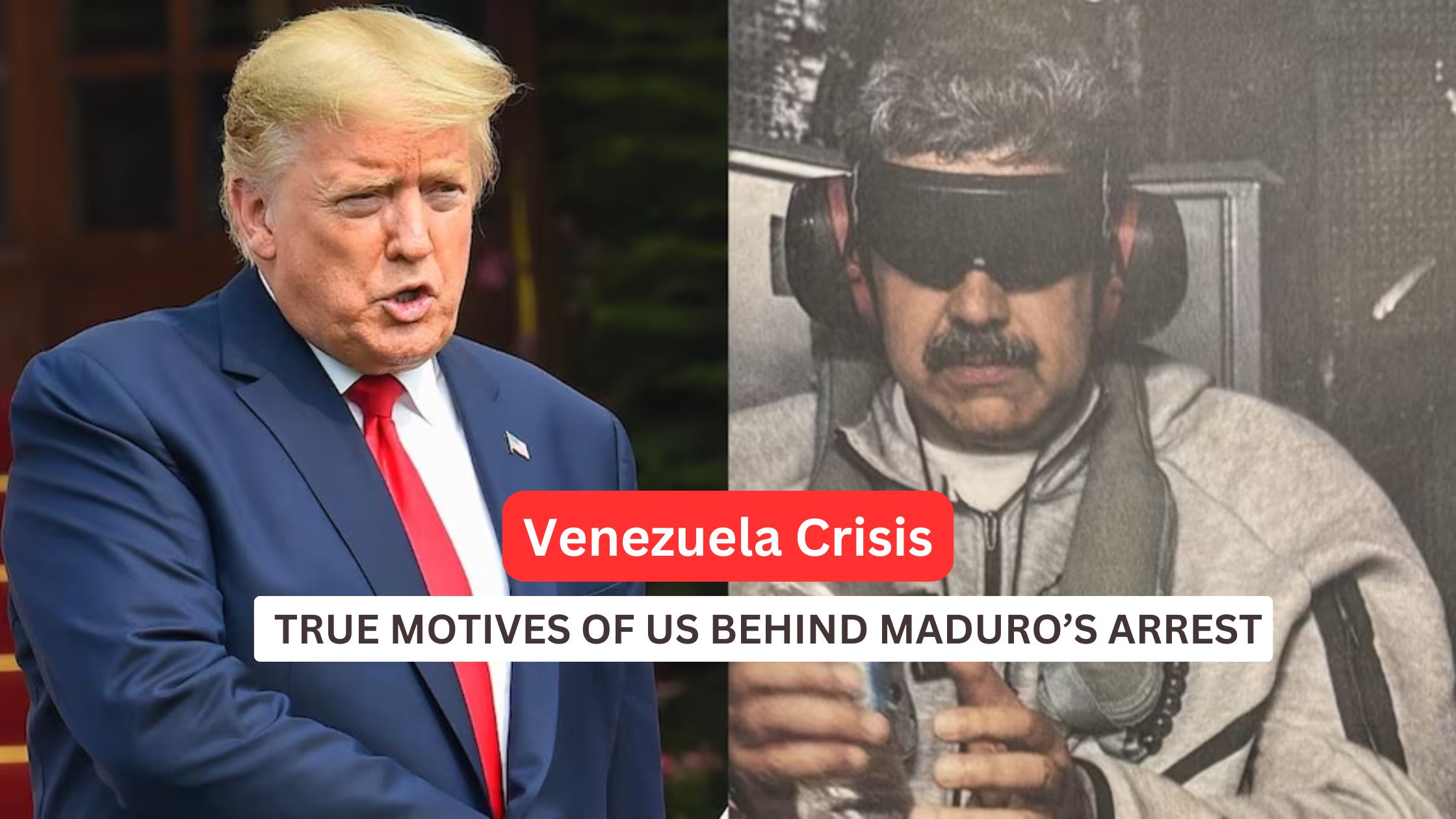
In a groundbreaking move that has stunned the international community, U.S. special operation forces conducted a violent military raid in Caracas, Venezuela last week. This surgical strike, named “Absolute Resolve” resulted in the capture of Venezuelan President Nicolas Maduro and killing of 40 people approximately. Such an irresponsible step by the United States has plunged South America into a state of extreme geopolitical uncertainty. It has also raised questions regarding international law and national sovereignty.
The Raid and Arrest
In the early hours of Saturday morning, Operation “Absolute Resolve” began with a series of precision air strikes targeting military and communication hubs in the Venezuelan capital. They reportedly infiltrated Maduro’s compound. After a brief but intense and violent firefight with the presidential guard, Maduro and his wife Cilia Flores, were seized. They were then extracted via helicopter from Caracas to the US Iwo Jima, an assault ship stationed in the Caribbean.
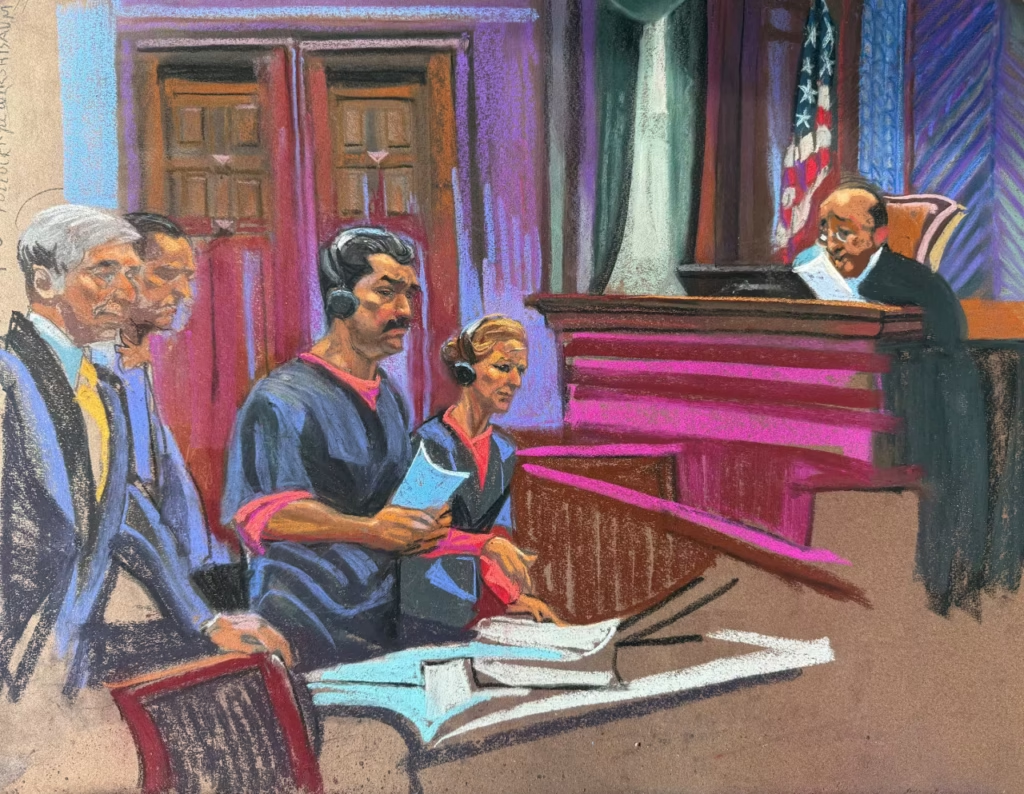
On Jan 5, Monday, Maduro was transported to a federal court in the Southern District of New York. He has been charged with narco-terrorism, conspiracy to import cocaine and money laundering by the U.S. Department of Justice. The Department alleged that he led the infamous “Cartel of the Suns” to “flood the United States with drugs.”
The U.S Justification: “Self Defense and Justice”
The White House has defended this intervention and framed it as a cleanup of a “criminal enterprise” and a necessary action to protect US national security. The US officials claims it as a traditional act of war but an act of self-defense because of following reasons:
Narcoterrorism:
They said that Maduro’s government has been functioning as a criminal organization, which destabilized Venezuela through drug trafficking.
Humanitarian Relief:
With an aim for Humanitarian relief to end a decade-long economic collapse, eventually helping the country to restore democracy.
Economic Recovery:
There has been speculation that the U.S. intends to “run” Venezuela temporarily. Now it seems to be a failed idea as when we look at their past desperate steps to run other countries in the name of humanitarian relief. They claim to repair its crumbling oil infrastructure—the largest reserves in the world—and ensure global energy stability.
While the U.S. maintains it is “liberating” Venezuela, the global community remains divided on whether this action brings justice or simply replaces one crisis with a more volatile one.
Against Perspective: A Dangerous Precedent
The operation has faced fierce condemnation from various global leaders and legal experts. As per UN Secretary-General António Guterres this move sets a “dangerous precedent” bypassing the Security Council. However, leaders in Mexico, Brazil, and Colombia have condemned the strike, fearing it could ignite a wider regional conflict and exacerbate the migration crisis.
Here are 7 reasons why Venezuela President Maduro’s arrest by U.S armed forces is considered an illegal and inappropriate operation globally:
Violation of the UN Charter (Article 2(4))
Article 2(4) of the UN Charter, explicitly states that no country shall use force against the territorial integrity of another state. Any attack carried out without the authorization of the United Nations is considered illegal under international law.
Head-of-State Immunity (ICJ Ruling)
In the 2002 ‘Arrest Warrant Case,’ ICJ ruled that a sitting President enjoys absolute immunity from the jurisdiction of foreign courts. By taking this action, the United States has completely disregarded this established global legal norm.
The Ker-Frisbie Doctrine:
U.S courts often rely on this, according to which a defendant can be prosecuted even if they were brought to the country via illegal ‘kidnapping.’ However, experts argue that such ‘Extraordinary Rendition’ severely tarnishes the image of democracy.
Power Vacuum and Anarchy
Political experts warn that the lack of a clear successor could trigger a state of total chaos or even a civil war in Venezuela.
Lack of Congressional Approval
According to the U.S. Constitution, the President requires authorization from Congress to engage in acts of war. This operation is being viewed as a violation of the War Powers Act, potentially sparking a constitutional crisis within the United States itself.
Opposition from Neighbors (The OAS Stance)
Several member states of the Organization of American States (OAS) have labeled the move as ‘Imperialist Aggression.’
Neighbors like Brazil and Colombia fear that this will lead to regional instability and a massive surge in the migration crisis.
Intervention by Russia and China
Venezuela owes billions of dollars in debt to Russia and China. These superpowers may view the arrest of Maduro as a direct assault on their economic interests, potentially igniting a new Cold War.
Will Maduro’s arrest finally end poverty in Venezuela, or is this just a war for control over oil? Let us know your thoughts in the comments!
About the Author