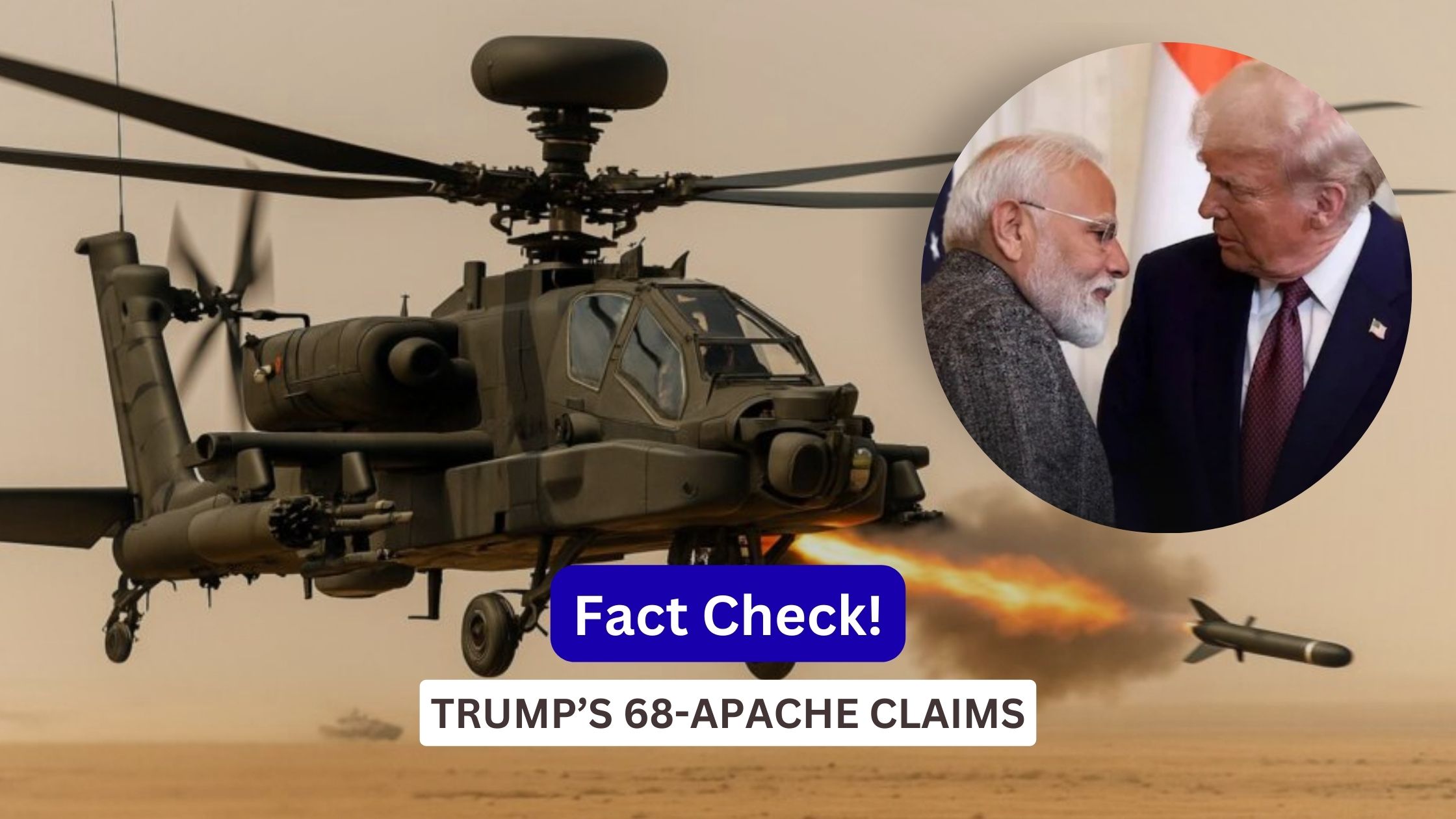
The exaggerated claims about the Apache deal are not simply a matter of “miscalculation”; they are part of a larger, high-stakes diplomatic strategy. As of early 2026, relations between Washington and New Delhi are going through their most volatile period in decades.
Here’s an analysis of how these claims impact bilateral relations:
1. The Trap of “Transactionalism”
President Trump’s focus on being “the best salesman ever” for Boeing transforms the perception of U.S.-India relations from a strategic partnership to a transactional relationship.
- The message to India: By presenting defense deals as personal favors or products he has “pushed through,” the president signals that security cooperation is contingent on trade concessions.
- The reaction: This further strengthens New Delhi’s suspicions. Indian officials are increasingly concerned that U.S. defense support could be “turned off” if trade negotiations. In particular, regarding the existing 50% tariffs on Indian goods—do not go Washington’s way.
2. Erosion of Trust in Defense Interoperability
The core of the “Major Defense Partner” status was the idea that U.S. and Indian systems would work seamlessly together (interoperability).
- Data Integrity: When a President uses incorrect figures (68 vs. 28) to criticize a partner to create a “fact-gap.” This makes it harder for the Indian Ministry of Defence to justify long-term, multi-billion dollar American platforms to the Indian public and parliament.
- Supply Chain Fears: Trump’s mention of the “five-year delay”—while exaggerated—touches a nerve. It reminds India of its vulnerability to U.S. supply chain bottlenecks, further accelerating India’s “Aatmanirbhar Bharat” (Self-Reliant India) initiative.
3. Impact on Trade and Tariff Negotiations
The Apache deal claims are not baseless; the US is using them as leverage in a larger trade war
- The “Reciprocity” Argument: The President frequently links “fair trade” to “fair defense.” By exaggerating the scale of defense cooperation, he is likely trying to build a narrative that the US is doing “too much” for India. Hence, justifies his administration’s aggressive tariff regime (including the 25% “Russian oil penalty” tariff).
- Negotiating Pressure: For PM Modi, such claims create a difficult domestic environment. If the US narrative is that India is a “difficult” customer. This reduces the political space for New Delhi to grant the trade concessions being demanded by Washington.
Contracts turned into Scorecards:
The “68 Apache Deal” claim is symptomatic of a deeper shift. A world where defense contracts are no longer seen as the “glue” holding alliances together, but rather as a scorecard for trade dominance.
About the Author