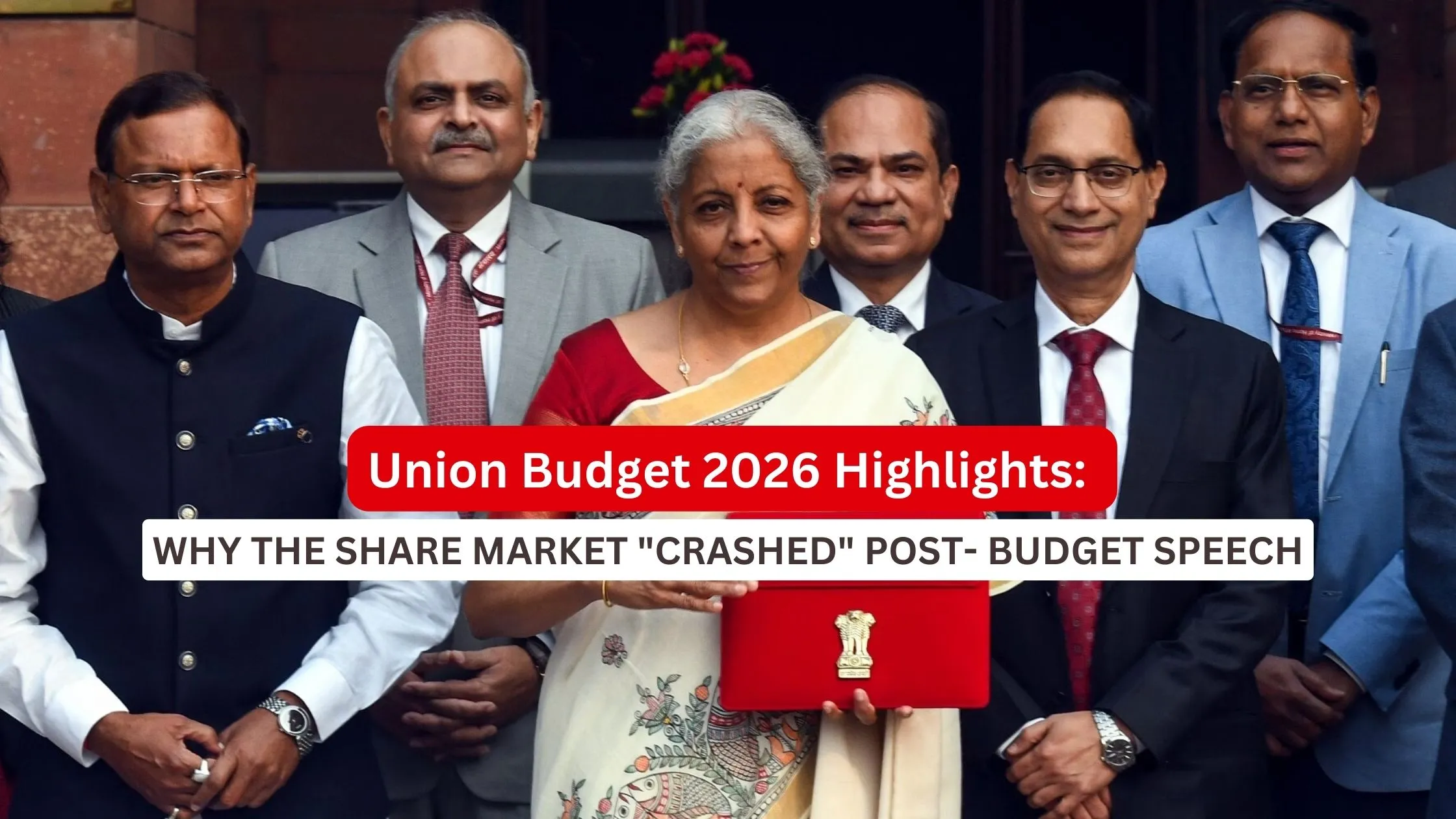
Union Budget 2026, presented today by our FM Nirmala Sitharaman, is a blueprint for not one year but up to the next two decades. This landmark document not only provides boost to our country’s economic gears but also shifts it from “recovery” to “frontier leadership” mode.
The Budget 2026-27 is built on three Kartavya Frameworks, i.e, Accelerating Growth, Capacity Building, and Universal Access, all of them setting the stage for a “Viksit Bharat” by 2047. Here is an analysis of how this budget can help the nation to improve its citizens’ ease of living conditions in the upcoming years:
1. Budget 2026 Core Pillar: Massive Public Investment
More movement and power to the “investment-led growth” strategy:
- Record Capex: The Public Capital Expenditure (Capex) has been raised to ₹12.2 lakh crore (up from ₹11.11 lakh crore last year).
- Infrastructure Risk Guarantee Fund: This is a new fund that will provide partial credit guarantees to private lenders. This fund aims to help private lenders to de-risk mega-projects and, hence, invite new private developers back into the infrastructure fold.
- ISM 2.0 & Electronics: To reduce our dependence on imports, the govt. has launched a massive ₹40,000 crore outlay for electronics components manufacturing. The government also launched Semiconductor Mission(ISM) 2.0, hence reducing our dependence on imports further.
2. Sectoral Impact: Shaping the Future
Agriculture: Productivity Over Subsidies
Here are some things that will support the farmers and also invite entrepreneurs in the agriculture field:
- Bharat-VISTAAR: It’s a multilingual AI- based platform including a chatbot that can provide customized advisory and information related to market updates, govt. Schemes and solutions related to farming problems. This will help farmers to improve crop production and therefore boost their income.
- High-Value Crops: The budget 2026 also supports and has dedicated promotion schemes for increasing production of high-value crops like Coconut, Cashew, Cocoa, and sandalwood so as to make India a premium brand in these crops by 2030.
- SHE-Marts initiative: The budget also mentions the promotion of these women-led self-help groups. They are especially made to help rural women entrepreneurs for better branding and market opportunities to create sustainable income avenues.
Healthcare: Medical Value Tourism & Biopharma
- Biopharma-Shakti: The govt. allocated a push of ₹10,000 crore over five years in this scheme to curb the strain on Bio-pharma due to non-communicable diseases like cancer and diabetes. This domestic Bio-pharma ecosystem will ensure a boost in the production of medicines for cancer, diabetes, autoimmune diseases, and rare diseases and hence making the pharacetical companies more self-reliant.
- Medical Hubs: The government is set to launch a scheme to support States in establishing five Regional Medical Hubsin partnership with the private sector to promote India as a hub for medical tourism. FM said, these hubs will serve as integrated health care complexes that combine medical, educational and research facilities.
- Ayurveda Expansion: She also mentioned that the budget 2026 includes the establishment of three new All India Institutes of Ayurveda and the upgrading of WHO Traditional Medicine centers.
Defence & Import-Export
- Increased incentives for backward supply chain linkage, particularly for MSMEs in the defense sector, to withstand geopolitical provocations are part of the Indigenization Drive.
- Customs Duty Reductions: The 20% tariff on all dutiable goods imported for personal use has been lowered to 10%. Duty on seventeen life-saving medications has also been reduced.
- Logistics: To reduce logistics costs and boost export competitiveness, a new East-West Dedicated Freight Corridor will be built from Dankuni to Surat.
Railways & Education
- Railways: To double the proportion of coastal shipping by 2047, seven High-Speed Rail Corridors and twenty new National Waterways are proposed.
- Education-to-Employment: Plans for five university townships close to industrial corridors and the creation of a powerful committee concentrating on the services sector.
- Women in STEM: One girls’ hostel for STEM institutions must be constructed in each district.
3. Budget 2026: It’s Impact on Daily Life
The budget talks about the combination of relief and long-term security for the typical citizen:
- Tax Reform: The new Income Tax Act 2025, which goes into effect in April 2026, attempts to streamline the tax code. It is anticipated that the standard deduction for salaried workers will increase in order to counteract inflation.
- Cheaper Imports: The 50% reduction in basic customs duty will make personal imports—such as electronics or clothing purchased online from overseas—much less expensive.
- Digital Public Infra: Improved Digital Public Infrastructure (DPI) enables quicker service delivery for healthcare, pensions, and scholarships.
4. Why the Share Market “Crashed” Post- Budget 2026 Speech
Shortly after the speech, the Nifty fell below 25,000 and the Sensex dropped by more than 1,000 points despite the growth-oriented headlines.
- The STT Shock: The government raised the Securities Transaction Tax (STT) on Futures and Options (F&O), which was the main cause of this. STT increased from 0.02 percent to 0.05 percent on futures and 0.15 percent on options.
- Reducing Derivative Volatility: The goal of the action is to reduce the “retail frenzy” in the F&O sector, which the RBI and SEBI have identified as a systemic risk. Nonetheless, traders perceived this as an instantaneous blow to profitability and liquidity.
- Profit Booking: The tax hike caused investors to “sell on news” because the rupee was at record lows ($91.90+) and FII (Foreign Institutional Investor) outflows persisted.
India’s Road to 2047…
The STT hike caused a “Sunday Blues” reaction in the stock market, but the long-term fundamentals of manufacturing and infrastructure have never looked better. A shift from “populism” to “structural resilience” is indicated by this 2026–2027 budget.
The government is placing a wager that developing a high-tech supply chain now will result in a $10 trillion economy by the next ten years by giving semiconductor missions, high-speed rail, and biopharma top priority.
About the Author