JNU Protest
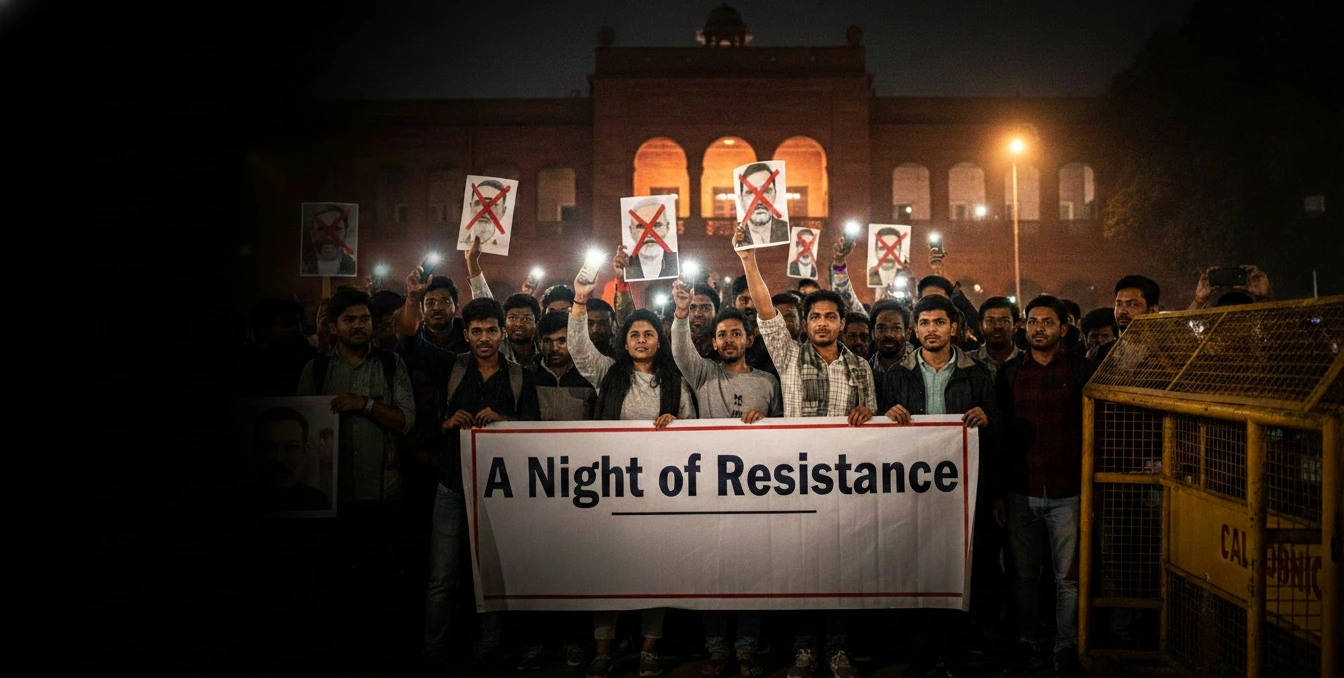
NEW DELHI — On Monday night at JNU, the air outside Sabarmati Hostel was thick with more than the winter chill. Students had gathered for a candlelight vigil titled “A Night of Resistance,” an annual ritual meant to mourn the brutal campus violence of January 5, 2020. But by morning, the flicker of candles had been replaced by the glare of a high-stakes administrative crackdown.
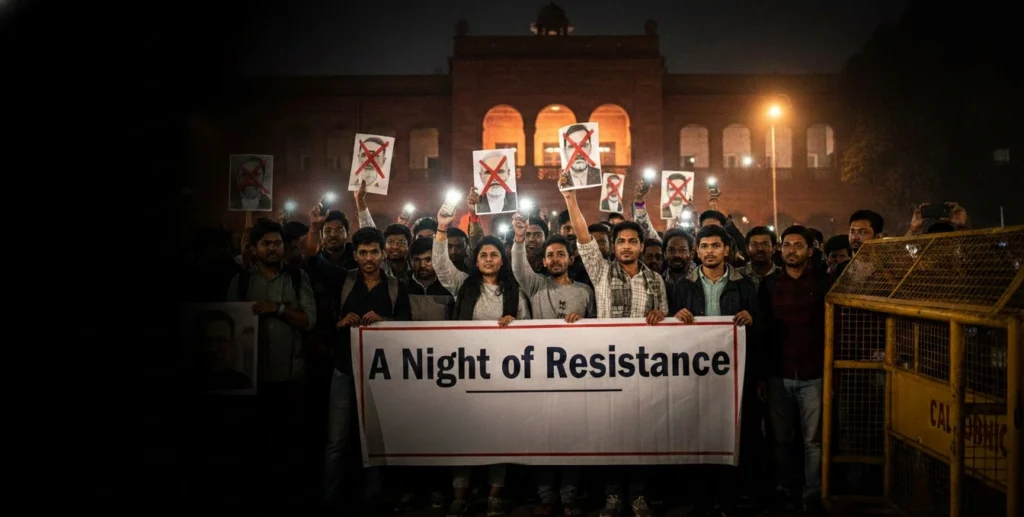
It took no time at all for the memorial to transform into a legal battleground. As soon as the news spread through the crowd that the Supreme Court had once again refused bail to former students Umar Khalid and Sharjeel Imam, the atmosphere of the gathering changed. What began as a remembrance of past transformed into a vocal outburst against the present political establishment.
The Administration Draws a Line
By Tuesday, the university’s official stance was unmistakable. In a series of sharp public statements, the JNU administration moved beyond simple condemnation. They didn’t just call the slogans “objectionable”; they labeled the campus a potential “laboratory of hate”. They warned that any student identified in the viral clips of the night would face the “strictest possible action.”
For the students involved, the stakes are no longer just academic. The administration has formally sought an FIR under the Bharatiya Nyaya Sanhita (BNS), naming student leaders like JNUSU President Aditi Mishra.The consequences are certain: immediate suspension, permanent expulsion, and a complete ban from entering the university premises.
A Campus Divided by Memory
For the JNU Students’ Union (JNUSU), the administration’s reaction is a classic case of “deflecting the narrative.” Aditi Mishra, speaking on behalf of the union, argued that the slogans were “ideological” expressions of dissent rather than personal attacks.
The union’s frustration stems from a deep-seated irony: while the university is moving with lightning speed to punish those who raised slogans, the masked goons who invaded the same hostels with iron rods six years ago remain largely unidentified and unpunished. “The vigil was for the victims of 2020,” a union statement read, “but the university is only interested in persecuting those who refuse to forget.”
The “Redux” Phenomenon
To many observers, this week’s events feel like a weary repetition of the 2016 sedition row. The ingredients are identical:
- A late-night protest.
- Mobile phone videos surfacing on social media.
- A swift move toward criminalizing campus speech.
Yet, there is a distinct exhaustion in the air this time. JNU has spent the last decade in a perpetual cycle of protest and litigation. For the 30-odd students gathered outside Sabarmati on Monday, a “Night of Resistance” was a way to keep a specific history alive. For the administration, it was a violation of a code of conduct that prioritizes “campus harmony” over political friction.
What Lies Ahead
As the Delhi Police begin verifying the authenticity of the videos, the university remains in a state of uneasy suspense. The Proctor’s office is reportedly setting up an internal inquiry that will run parallel to the police investigation.
In the coming days, the corridors of JNU will likely be filled with more than just academic debate. They will be filled with the weight of potential expulsions, the shadow of pending FIRs, and the enduring question of where “democratic dissent” ends and “unlawful conduct” begins in modern India.
About the Author